At Woods Bee Co., honey is more than just a product — it’s a labor of love and a symbol of the harmony between humans and nature. Nestled in Centralia, Washington, our honey farm is dedicated to producing premium, unfiltered honey through sustainable practices that support both local ecosystems and passionate beekeepers. In this guide, we take you behind the scenes to show how honey moves from hive to jar through a thoughtful and carefully executed process known as honey extraction.
Whether you’re an aspiring apiarist or a curious customer, this step-by-step breakdown reveals what makes Woods Bee Co. honey so special — and how we ensure every jar reflects the purity and quality nature intended.
Honey extraction is the process of removing honey from the honeycombs within a beehive. Unlike harvesting fruits or vegetables, honey extraction requires care and precision to protect the bees, preserve the integrity of the comb, and ensure the honey remains unfiltered and nutrient-rich.
While honey bees work tirelessly to produce and store honey, it’s the beekeeper’s responsibility to harvest it in a way that maintains the hive’s health. At Woods Bee Co., we use time-tested techniques and modern equipment to extract honey cleanly and efficiently — all while respecting our bees and their environment.
Successful honey extraction requires more than a sweet tooth. Here’s a list of essential tools used by professional beekeepers and hobbyists alike:
At Woods Bee Co., we supply many of these tools through our on-site store and are happy to guide beginners on selecting the right equipment for their first extraction.
Honey extraction can be one of the most rewarding parts of beekeeping. Here’s how it works from beginning to end:
Before harvesting, we carefully inspect each hive to ensure the honey is fully ripened and capped. This ensures the moisture content is low enough to prevent fermentation and guarantees a rich, shelf-stable product.
Using a smoker to gently calm the bees, we remove the frames from the hive box. The frames are handled with care to avoid damaging the bees or their wax comb.
Each frame of the honeycomb is sealed with a thin layer of wax. We use an uncapping knife or fork to slice off this layer, exposing the golden honey inside.
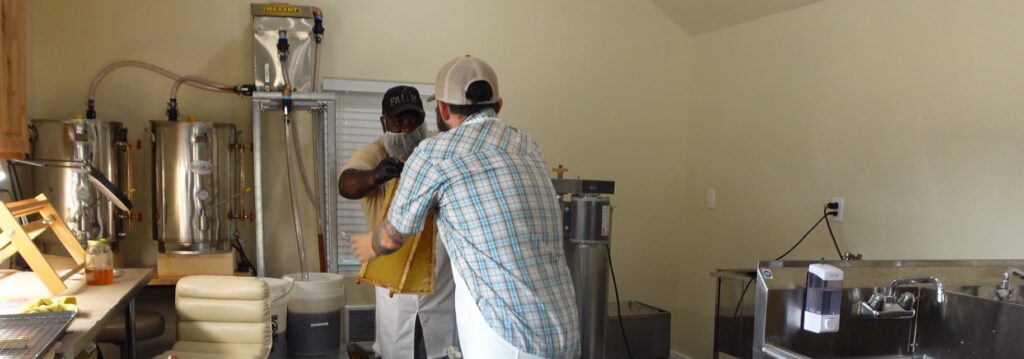
The uncapped frames are placed inside a honey extractor — a spinning drum that uses centrifugal force to draw honey out of the comb. At Woods Bee Co., we use high-quality extractors that ensure every drop is collected with minimal waste.
Once collected, the honey passes through a food-grade mesh or cheesecloth to remove any residual wax or particles. This step keeps the honey raw and unfiltered while ensuring a clean final product.
After straining, the honey is left to settle in a bottling tank, allowing air bubbles and fine particles to rise to the top. Once settled, it’s poured into sterilized jars, sealed, and labeled — ready for your kitchen or market shelf.
At Woods Bee Co., we go the extra mile to preserve the natural benefits and integrity of our honey. Unlike industrial processes that pasteurize or ultra-filter honey, our approach is:
We only harvest surplus honey — meaning the bees always have enough left to sustain themselves. Our method isn’t just about creating a better product; it’s about protecting the ecosystem that makes it possible.
Thinking about extracting honey from your own hive? Here are a few beginner-friendly tips to keep in mind:
If you’re just getting started, our onsite consultant services can walk you through your first extraction. We also offer seasonal honey extraction support for local beekeepers.
How often should I extract honey?
Most beekeepers harvest once or twice per year — typically in late spring and again in late summer, depending on the nectar flow.
Do I need to feed my bees after extraction?
If you extract too late in the season or take too much, supplemental feeding (sugar syrup or pollen patties) may be needed to support the hive.
Is extracting honey harmful to the bees?
Not when done responsibly. At Woods Bee Co., we leave enough honey behind for the colony’s needs and avoid unnecessary disturbance.
Can I reuse the honeycomb?
Absolutely. Preserving the comb saves the bees energy, allowing them to focus on foraging rather than rebuilding.
Whether you’re purchasing a jar of our local wildflower honey or learning to extract your first batch, Woods Bee Co. is here to support your beekeeping journey. Our honey isn’t just a sweet treat — it’s the result of a sustainable, ethical process that respects the bees and honors the land they live on.
Visit our Centralia farm stand, attend a workshop, or consult with our team to learn more about responsible honey extraction. Together, we can keep the bees thriving and the honey flowing — one frame at a time.